Playing to Win Strategy Offsite for a Financial Services Company in the Energy Industry
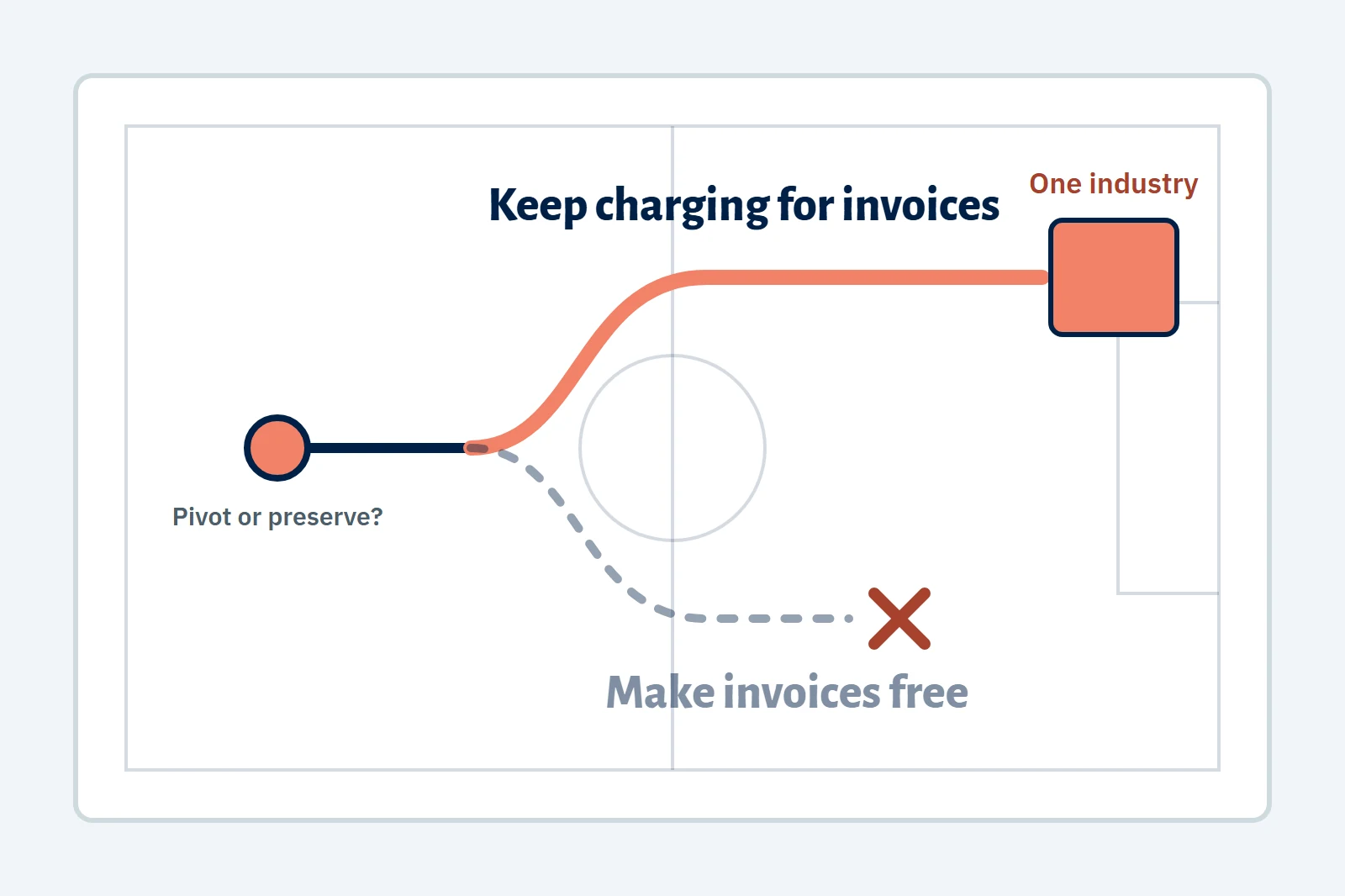
A financial services company in the energy industry faced a choice that could set its direction for years. Its core invoicing product was under attack from established players and startups, and its leaders had to decide whether to keep charging for invoices or move to a free model and earn revenue from added services.
After a three-day strategy offsite in Golden, Colorado, guided by a FUSE facilitator, the C-suite and executive leadership team chose to keep charging for invoices and to focus the company's added services on the energy industry. Revenue grew steadily over the next two years, and the company went on to become a market leader in that space.
THE APPROACH
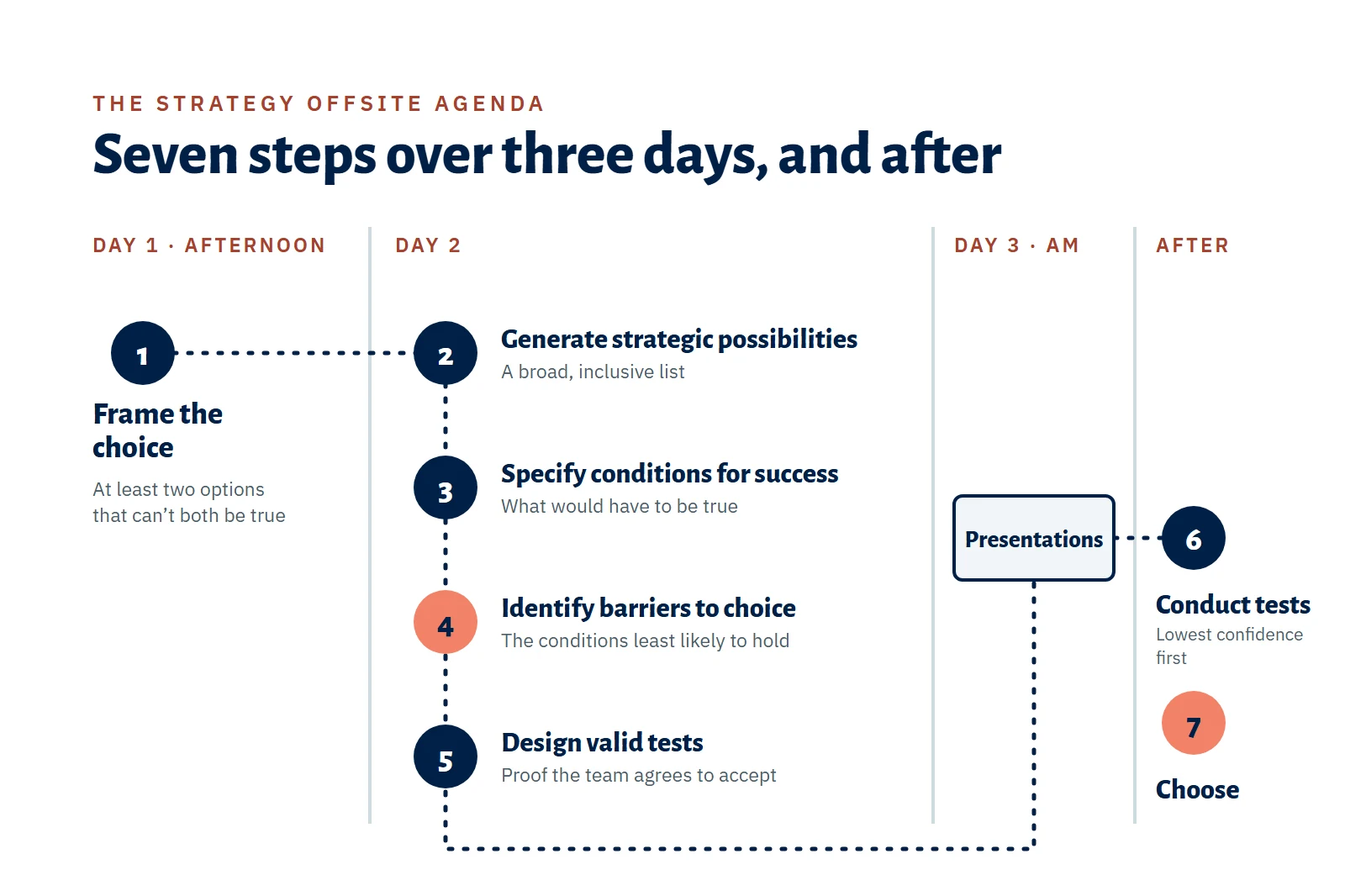
We worked with the CEO to plan the offsite and built it around Playing to Win, A.G. Lafley and Roger L. Martin's strategy framework. A FUSE facilitator and two fellow coaches turned the framework into a seven-step process that took the team from an open question to a choice it could test.
THE SEVEN STEPS
- Frame the choice: turn the issue into at least two options that could not both be true.
- Generate strategic possibilities: widen the list of options before narrowing it.
- Specify the conditions for success: what would have to be true for each possibility to win.
- Identify the barriers to choice: the conditions the team was least confident would hold.
- Design valid tests: tests the whole team would accept as enough to commit.
- Conduct the tests: test each hypothesis, starting with the condition the team was least confident in.
- Choose: compare the test results with the conditions for success and make the call.
THE OFFSITE
- Day one: the team framed the choice.
- Day two: the team generated its possibilities, specified the conditions for success, identified the barriers, and designed a test for each.
- Day three: the team presented its possibilities and tests.
- After the offsite: the team ran the tests and compared the results with its conditions to make the choice.
OUTCOMES ACHIEVED
- The company decided to keep charging for invoices.
- It focused its added services on the energy industry alone and built a suite of industry-specific products that made the invoicing solution stickier.
- Revenue grew steadily over the next two years while the company protected its market share.
- The company went on to become a market leader in that space.