Leadership simulation
Leadership Under Construction
Crews build a small town together, one round at a time. After each round, they reflect on how they worked and learn a leadership skill they can use straight away.
FUSE Facilitation Leadership Under Construction
- Project
- A small town, built by your team
- Crews
- About five people each
- Buildings
- One per crew
- Length
- One full day
- Site
- Outdoors, with an indoor plan
- Materials
- We bring everything
- The Town
- Your FUSE facilitators
- Take-home
- Five leadership skills
What is Leadership Under Construction?
Leadership Under Construction is a full-day building simulation that FUSE runs for leadership teams. Crews of about five build a small town together in four rounds: they stake a site, gather materials, raise a building and add the finishing touches.
After each round, crews come inside to talk about how they worked, and we teach a practical skill connected to what they just experienced: team roles, conflict, change or time management. People learn each skill from an experience they just shared, and finish the day by committing to one tool they’ll use at work.
The lumber, ties and twine are real, and so are the deadlines and the budget. Crews plan, split up the work, disagree and adapt much as they do at the office, so every lesson has a shared example to work from.
The crew
Four roles on every crew
Each crew of about five takes on four roles and keeps them all day. Everyone helps build.
Site Super
- Coordinates the crew and watches the time
- Represents the crew with the Town
- Leads the response when the plan changes
Planner
- Works out the route, layout and building sequence
- Reads the plans and checks measurements
- Explains the next step to the crew
Materials Lead
- Organizes equipment and materials
- Prepares pieces and fasteners
- Manages supplies and the upgrade budget
Builders ×2
- Lead the physical work
- Lay out the site and assemble the frame
- Ask teammates to help hold and fasten
Before work starts
Our crew alliance
- AtmosphereWhat atmosphere do we want to create together?
- ThriveWhat do we each need to thrive in this team?
- ChallengeHow will we work together when things get challenging?
Each crew agrees on its answers before the first round, then tells the room how those agreements will help it work better together. The Designed Team Alliance comes from Organization and Relationship Systems Coaching (ORSC) by CRR Global.
The kit
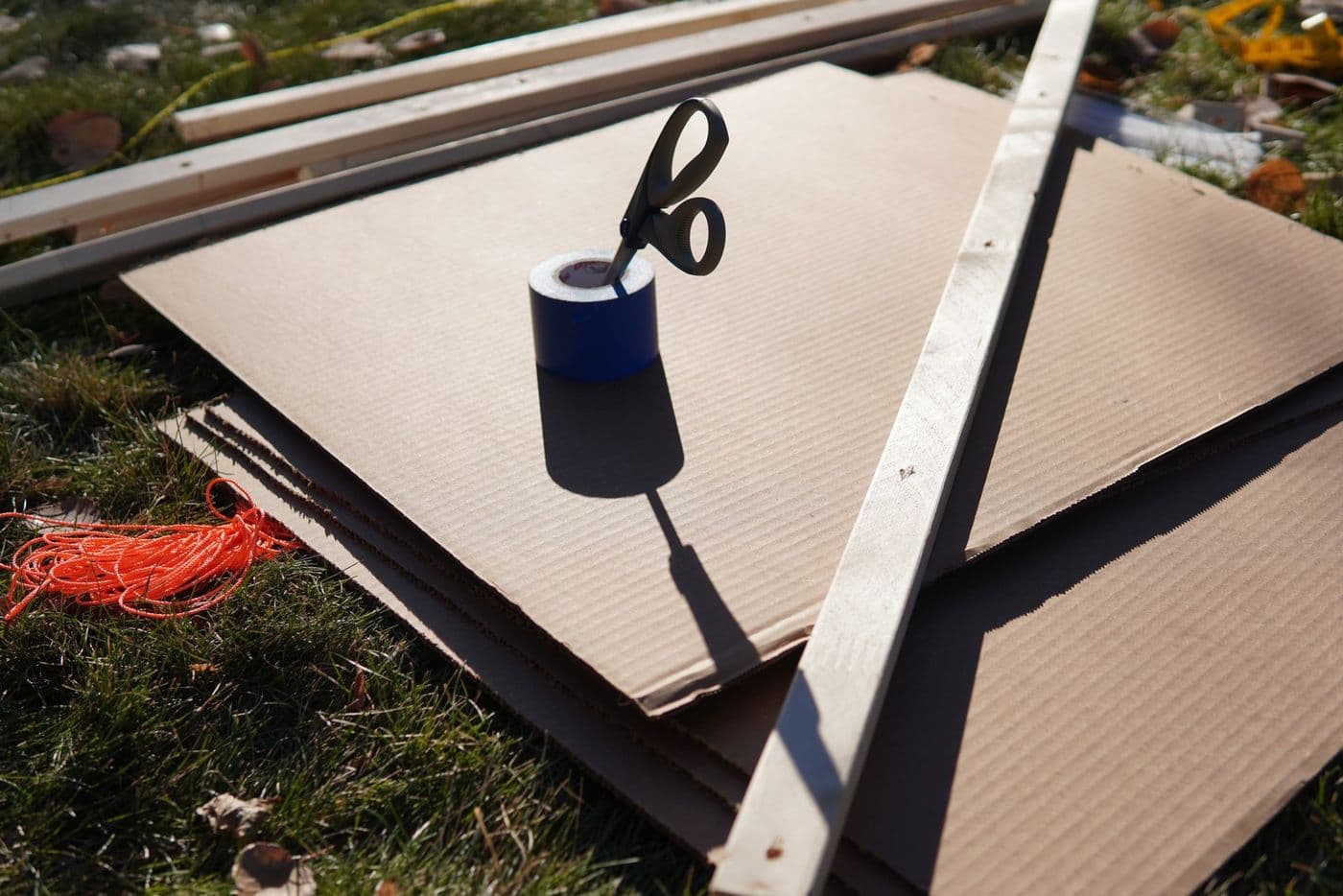
Every crew gets the same materials
| Item | Used for |
|---|---|
| 1×2 lumber strips, cut to length and drilled | The frame |
| Zip ties | Joining the strips |
| Twine | Bracing the frame |
| Cardboard panels | The roof |
| Duct tape and painter’s tape in several colors | Seams and trim |
| Colored paper, markers and cardboard offcuts | Finishing touches |
| Work gloves | Everyone on the crew |
The pieces arrive cut and drilled, and crews assemble everything by hand with zip ties, twine and tape.
The schedule
How the day runs
Every round follows the same rhythm: a hands-on challenge at the job site, then a short lesson at base camp that turns what just happened into a tool for the office.
- Job site, outdoors
- Base camp, indoors
- Breaks and lunch
- Opening and crew alliances9:00–9:40 · base camp
- Round 1: Stake the Site9:40–10:00 · job site
- Roles Work10:10–10:55 · base camp
- Round 2: Material Run10:55–11:30 · job site
- Conflict management11:30–1:10, around lunch · base camp
- Round 3: Raise the Building1:10–1:55 · job site
- Change management2:05–2:40 · base camp
- Round 4: Finishing Touches2:40–3:10 · job site
- Time management3:10–3:40 · base camp
- The Grand Reveal3:40–4:00 · job site
- Back to the office4:00–4:30 · base camp
The schedule from one build day. We fit the times to your group and venue.
The rounds
Four rounds, each followed by a lesson
Round 1 of 4
Stake the Site
At the job site
With 8 m of rope and four cones, each crew marks out the largest rectangular plot it can while meeting the site rules, such as set distances from a creek and trees, the most afternoon sun on one corner, and level ground. Only the Site Super reads the brief, so the crew relies on how well it’s passed on. The Town signs off each plot.
Debrief questionWhat inner roles showed up while you staked the site?
At base camp
Roles Work
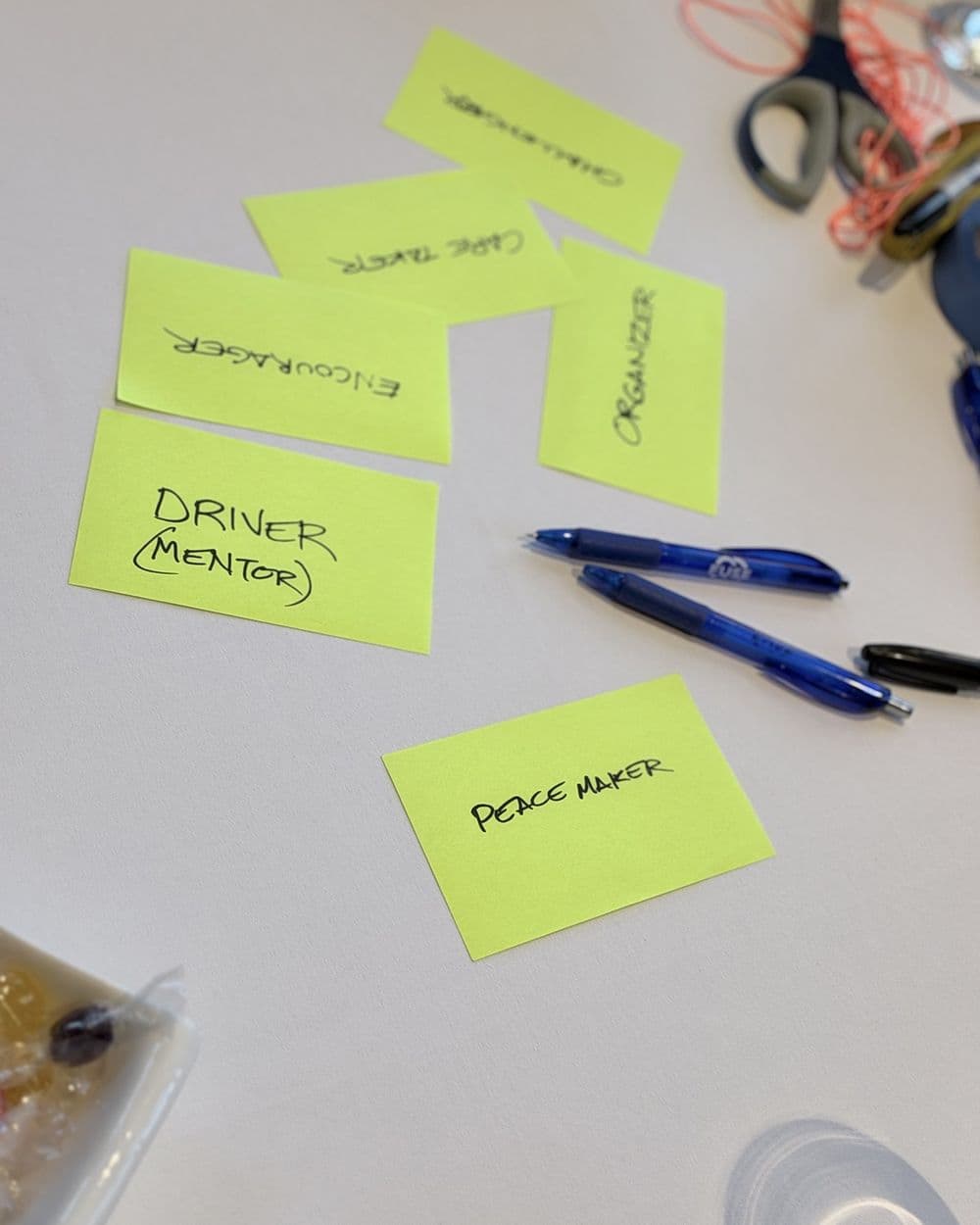
Teams hold three layers of roles, like geological strata. Outer roles are the jobs, inner roles keep the team working together, and ghost roles come from absent people or past events. Crews name the inner roles that showed up, such as Peacemaker, Challenger or Encourager, recognize what each one gives the team, and agree on one or two changes to their alliance.

The inner roles one crew named after staking its site. Round 2 of 4
Material Run
At the job site
The crew’s materials are locked away, and the key is a team photo taken at a location the crew doesn’t know yet. The Planner reads a clue card that leads to two landmarks, and the crew takes its photo at the second. Back at base, crews choose their blueprint in the order they return and collect their wood and zip ties. We plan the route with you; in our example, it was a 20- to 30-minute walk on flat ground.
Debrief questionWhat happened when someone was unsure, disagreed or felt rushed?
At base camp
Conflict management
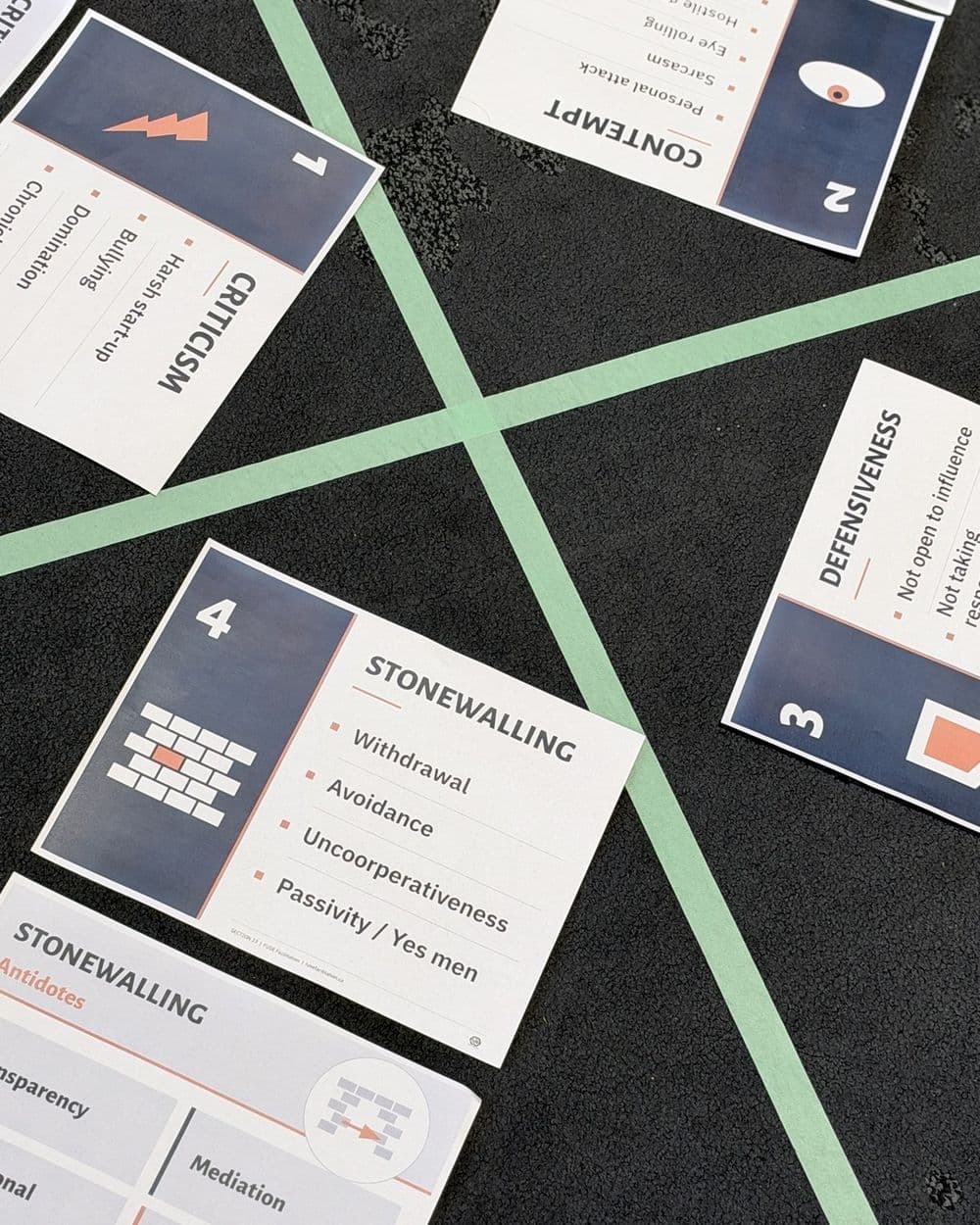
We separate constructive conflict, a healthy debate about the issue, from toxic conflict aimed at each other. Building on Dr. John Gottman’s research, the group stands on a floor grid of the four team toxins (criticism, contempt, defensiveness and stonewalling), then explores the antidotes, including the COIN feedback model. Each person commits to one antidote with their crew.
See how the Team Toxins exercise runsThe Team Toxins grid, taped on the floor at base camp. Round 3 of 4
Raise the Building
At the job site
Crews build the frame on their blueprint: drilled strips joined with zip ties, braced with twine and roofed with cardboard. Partway through, the Town issues a change order, the way a real client would, and the crew works it into the build.
Debrief questionHow did your crew lead the change, and which parts of the approach helped?
At base camp
Change management
We teach four approaches to leading change, each with its own focus: Lewin’s force field analysis looks at the problem, Kotter’s 8-step process at the strategy, Prosci’s ADKAR® model at the people, and Esther Derby’s 7 rules for positive, productive change at learning as you go. Each crew reports back on its change through the approach matched to its building.
See the four change ordersRound 4 of 4
Finishing Touches
At the job site
The town opens soon, and time and budget are running low. Each crew sorts eight possible upgrades on a matrix, from inspection repairs to naming the building or adding a community garden, and spends its four tokens on the ones it chooses. Then the crew makes its building its own with paper, markers, tape and cardboard.
Debrief questionWhat strategy did you use to prioritize the upgrades?
At base camp
Time management
We work through generations of time management: the to-do list, the Eisenhower matrix for sorting urgent from important, planning the week, and managing energy. Each person then chooses a time for one important task that rarely feels urgent, such as mentoring a future leader.
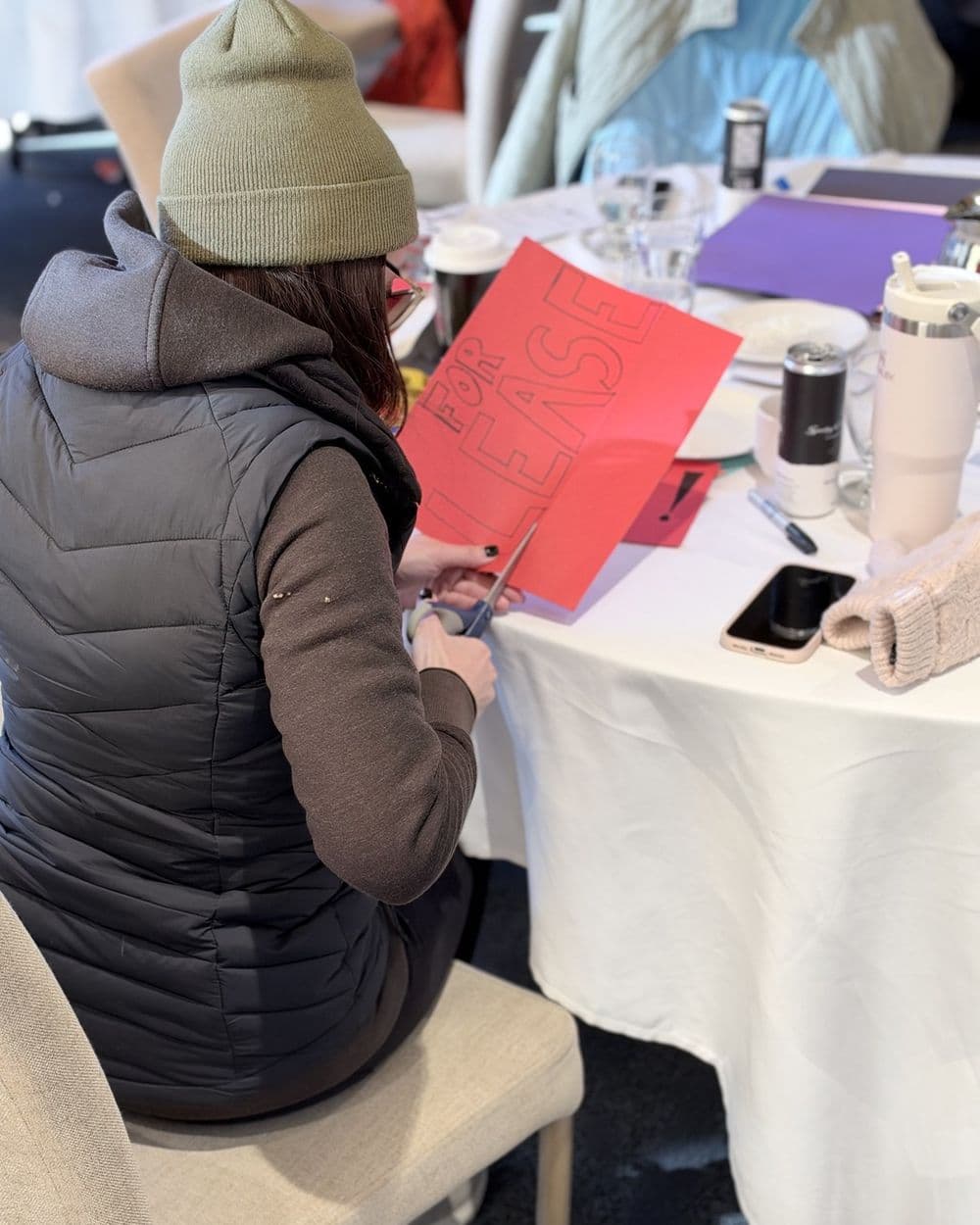
A sign in the making for one building’s finishing touches.
Round 3 in detail
Four buildings, four change orders
Each building gets a different change partway through the build, matched to one approach to leading change. The Town gives feedback as crews work, then shares what it noticed across the crews about understanding, involvement and action.
| Rev. | Building | Change order | Approach to leading it |
|---|---|---|---|
| 1 | Visitor Center | Add a gabled window to one roof slope. | Lewin’s force field analysisList the forces for and against each slope, then choose one. |
| 2 | General Store | Add a covered porch. | Kotter’s 8-step processUse at least two of the steps to plan and build it. |
| 3 | Apartment Building | Cover for people who are away: the Planner and the Materials Lead swap jobs with the two Builders. | Prosci’s ADKAR® modelSupport what each person needs to take on the new job. |
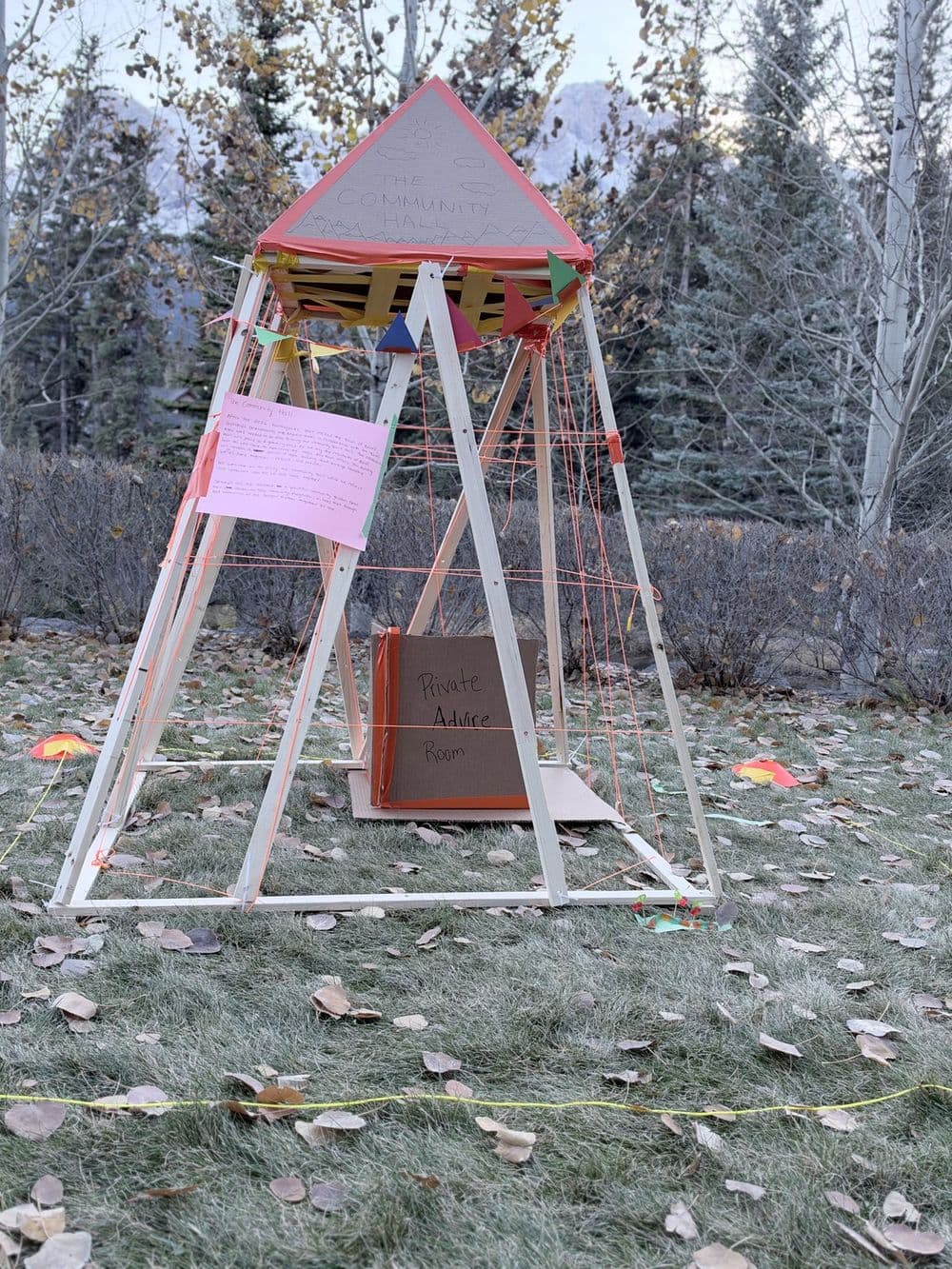
| 4 | Community Hall | Add a partition so residents can talk privately about their move. | Esther Derby’s 7 rules for changeTry it, ask the Town to check the view from the entrance, and adjust. |
The reveal
The Grand Reveal
Crews walk the finished town together and vote with applause for the building that is most creative and best serves its purpose. The winning crew receives medals, and everyone gathers for a photo with the town.
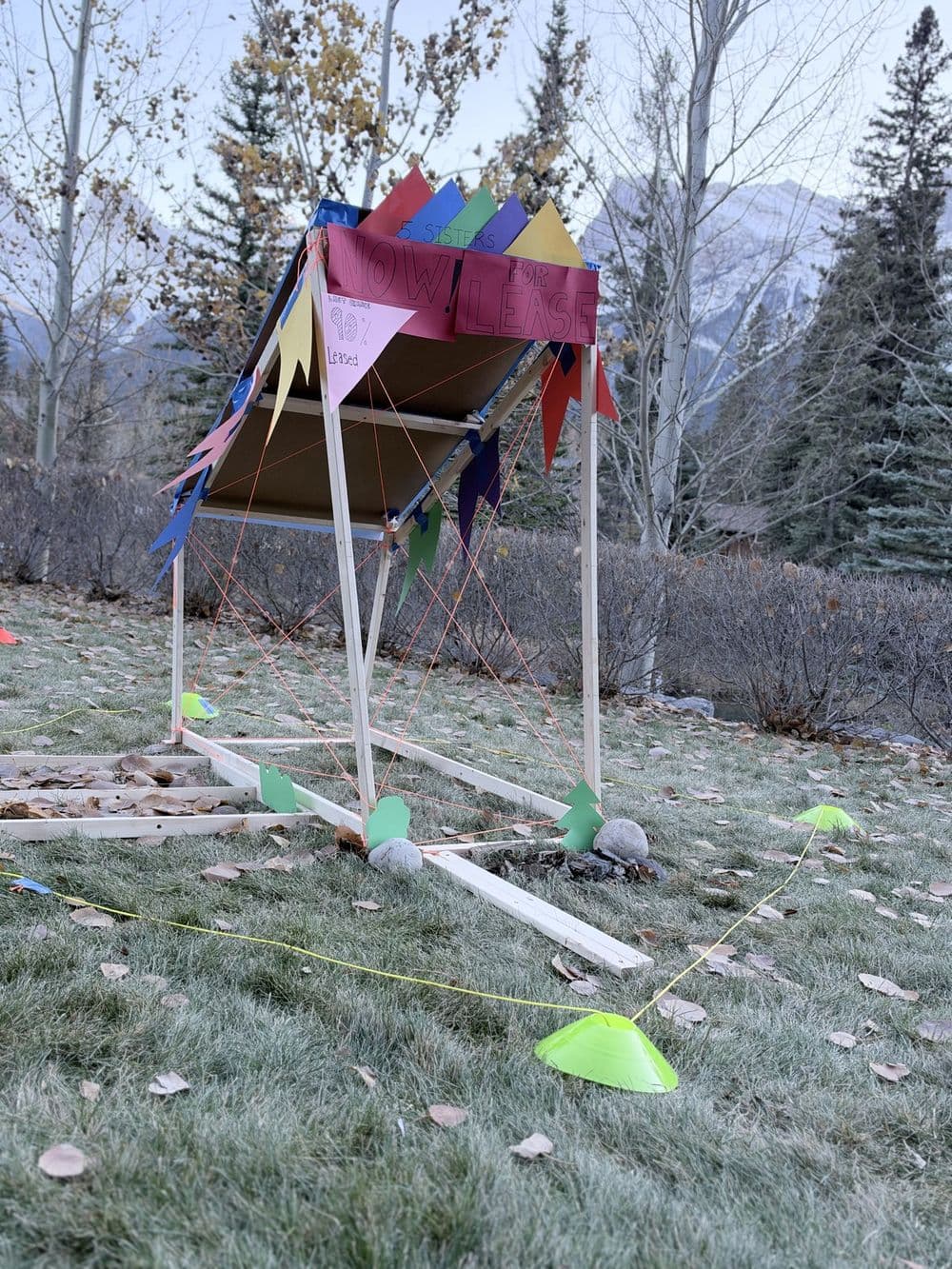
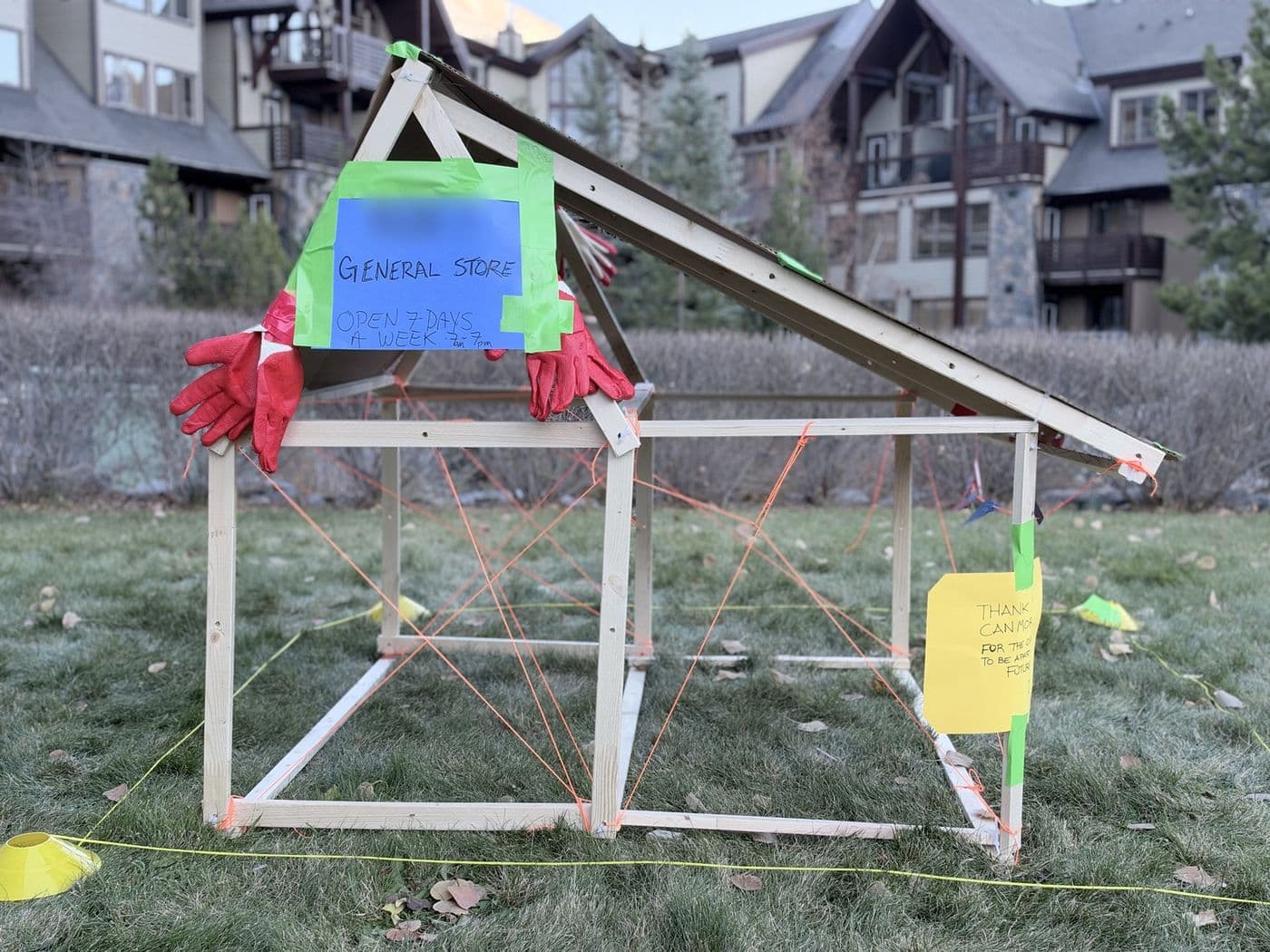
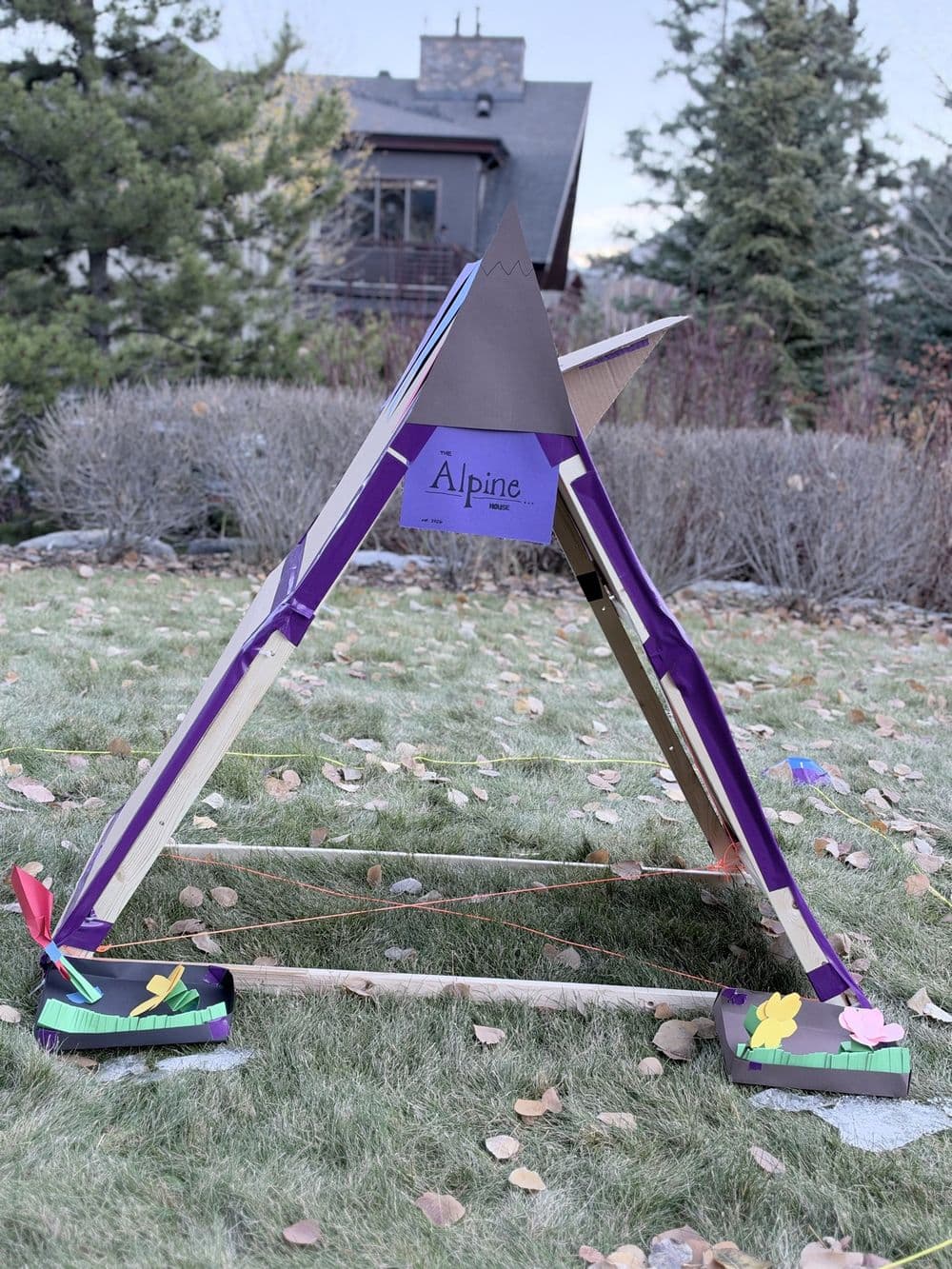
The Visitor Center The General Store The Apartment Building, named the Alpine The Community Hall, with its private advice room
The close
Back to the office
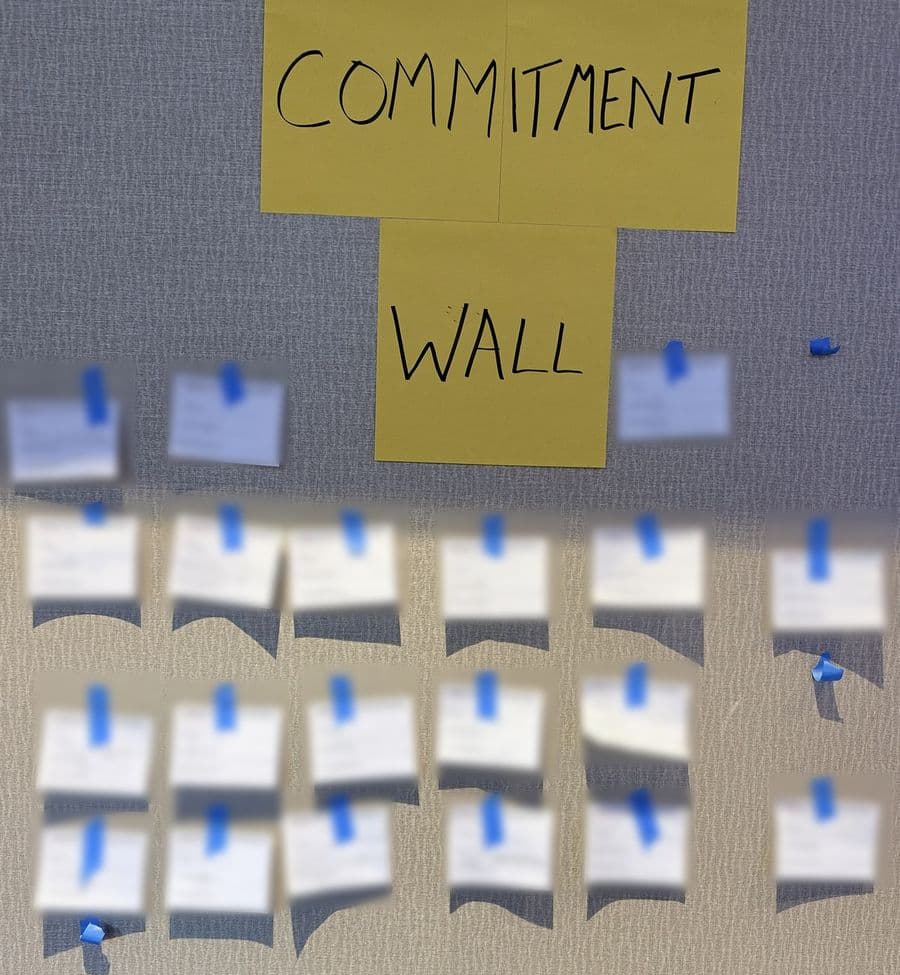
The day ends back at base camp. We review the five skills, and each person fills in a commitment card for the one tool they’ll use at work, reads it to the group and tapes it to the commitment wall.
My commitment
- I commit to…
- You will see this when I…
- Peers can support me by…
One example from our work
A leadership team from a homebuilding group
A homebuilding and development group asked us to open its quarterly leadership meeting with a day of team building and leadership development. The group was a mix of seasoned leaders and people new to managing a team. We planned the day with the company: four crews of five, four buildings and five leadership skills, with the meeting’s second day kept for the group’s own strategy work.
Exit ticket 18 responses
- I can use clear team roles and a Designed Team Alliance to help my team work together.18 of 18 agreed
- I can recognize team toxins and use a practical response to manage conflict at work.18 of 18 agreed
- I understand the change management frameworks and can identify one to apply at work.18 of 18 agreed
- I can use the Eisenhower matrix to prioritize important work and manage urgent requests.18 of 18 agreed
The tool named most often as the one thing to apply at work: the Eisenhower matrix.
Requests for information
Questions we often hear
How long does a build day take?
One full day. Our build days run from about 9:00 to 4:30, with lunch and two short breaks, and we fit the schedule to your group and venue.
Does anyone need building experience?
No. The pieces arrive cut and drilled, and crews assemble everything by hand with zip ties, twine and tape. The roles share out the work, and everyone gets work gloves.
What if the weather turns?
We plan an indoor version as well. Crews stake their plots inside with the same rope and cones, build there, and leave the buildings in place for the reveal. The material run stays a short walk outdoors.
How many people can take part?
Crews have about five people, so a bigger group means more crews. For a large group, we may recommend running the day twice so every crew gets hands-on coaching.
Is it a competition?
A friendly one. Crews compete for the best build of the day, decided by applause at the Grand Reveal, and every crew leaves with the same five skills.
Can you connect it to our business?
Yes. We plan the day with you, including the scenario, the skills we teach and how each lesson links to your team’s work. Your leaders can open the day and connect it to what’s ahead for the company.
Where do the lessons come from?
They draw on established work: the Designed Team Alliance and Roles Work from Organization and Relationship Systems Coaching (ORSC) by CRR Global, the team toxins from Dr. John Gottman’s research, the change approaches of Kurt Lewin, John Kotter, Prosci and Esther Derby, and Stephen R. Covey’s generations of time management.
Plan a build day for your team
Tell us about your group and what you want people to take back to work. We’ll plan the scenario, the crews and the skills with you.
Book a discovery call