Essence · The felt sense
Meet the creature
Before the strategy language, there is an impression: a tree with tangled roots, a bird ready to fly, a creature that needs room to breathe. Each image offers a way to sense the system as a whole.
Strategy & Goal-Setting · An ORSC tool
Give your team's vision a shape.
Then give it somewhere to go.
What happens in the room
Bringing Down the Vision is an ORSC systems coaching exercise. People imagine their organization as a living system, share what they see, and use the images to uncover strengths, needs, and possibilities.
The group gathers common themes, explores ideas in smaller teams, and turns those ideas into commitments. It can focus on the team today, a future it wants to create, or a particular challenge it needs to address.
The journey
ORSC calls these Essence, Dreaming, and Consensus Reality. Each has a different job in the conversation.
Essence · The felt sense
Before the strategy language, there is an impression: a tree with tangled roots, a bird ready to fly, a creature that needs room to breathe. Each image offers a way to sense the system as a whole.
Dreaming · Meaning and possibility
Look at the images together. Explore the hopes, feelings, values, and needs they carry. Different pictures can reveal different parts of the same team.
Consensus Reality · Everyday work
Bring the insights into the team’s actual work: priorities, resources, responsibilities, and dates. The vision now has something people can act on and revisit.
The exercise in the room
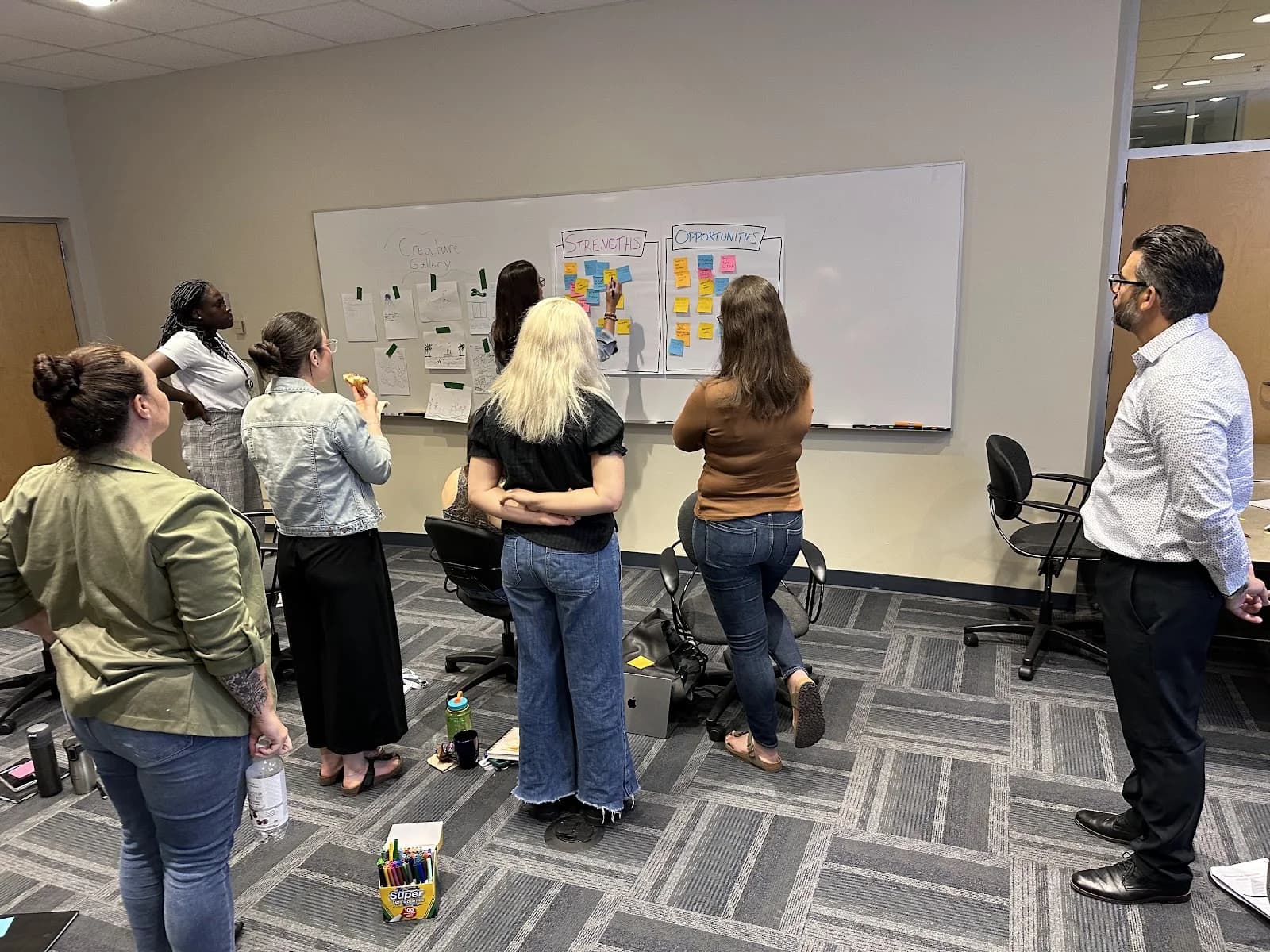
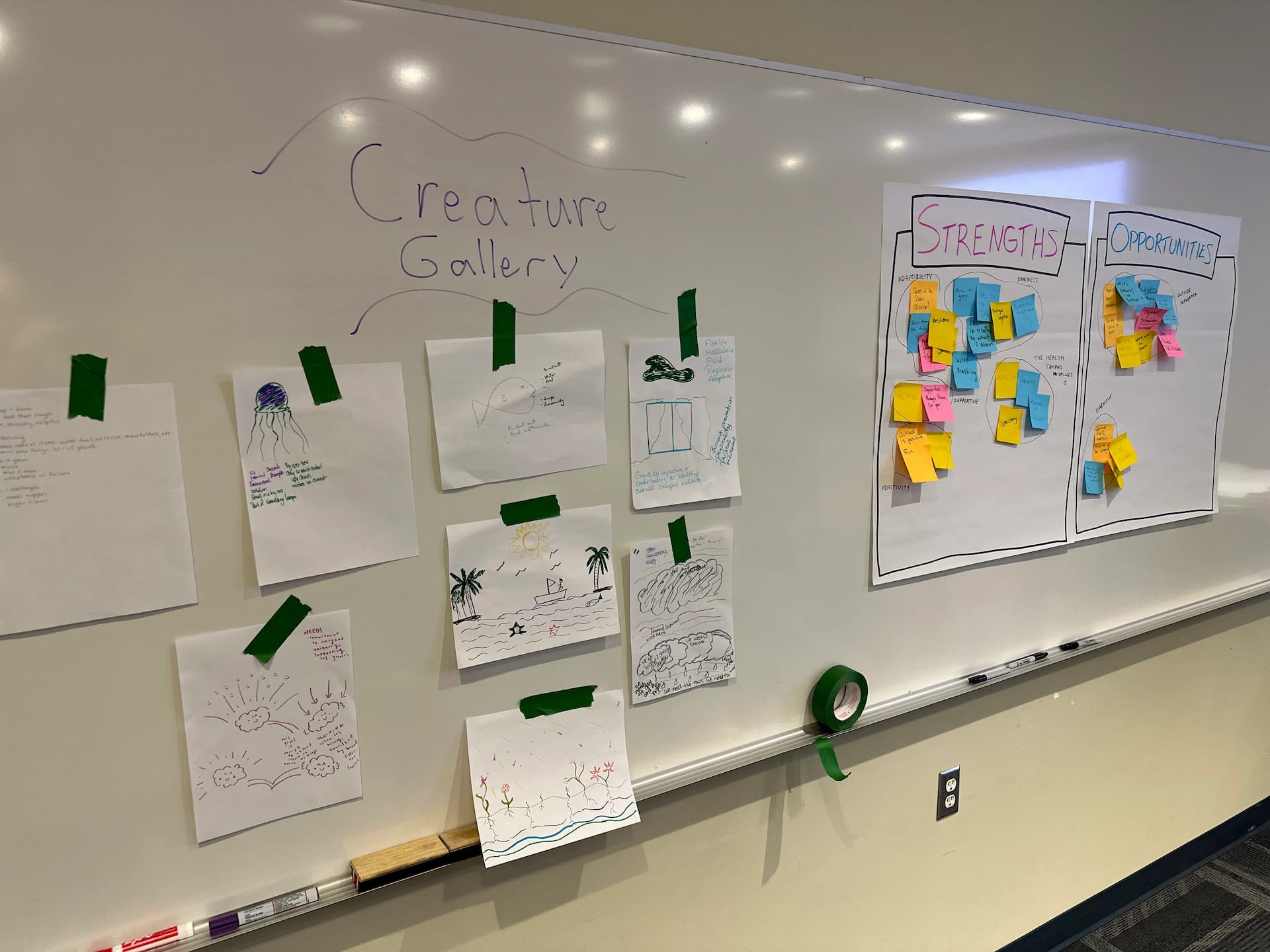
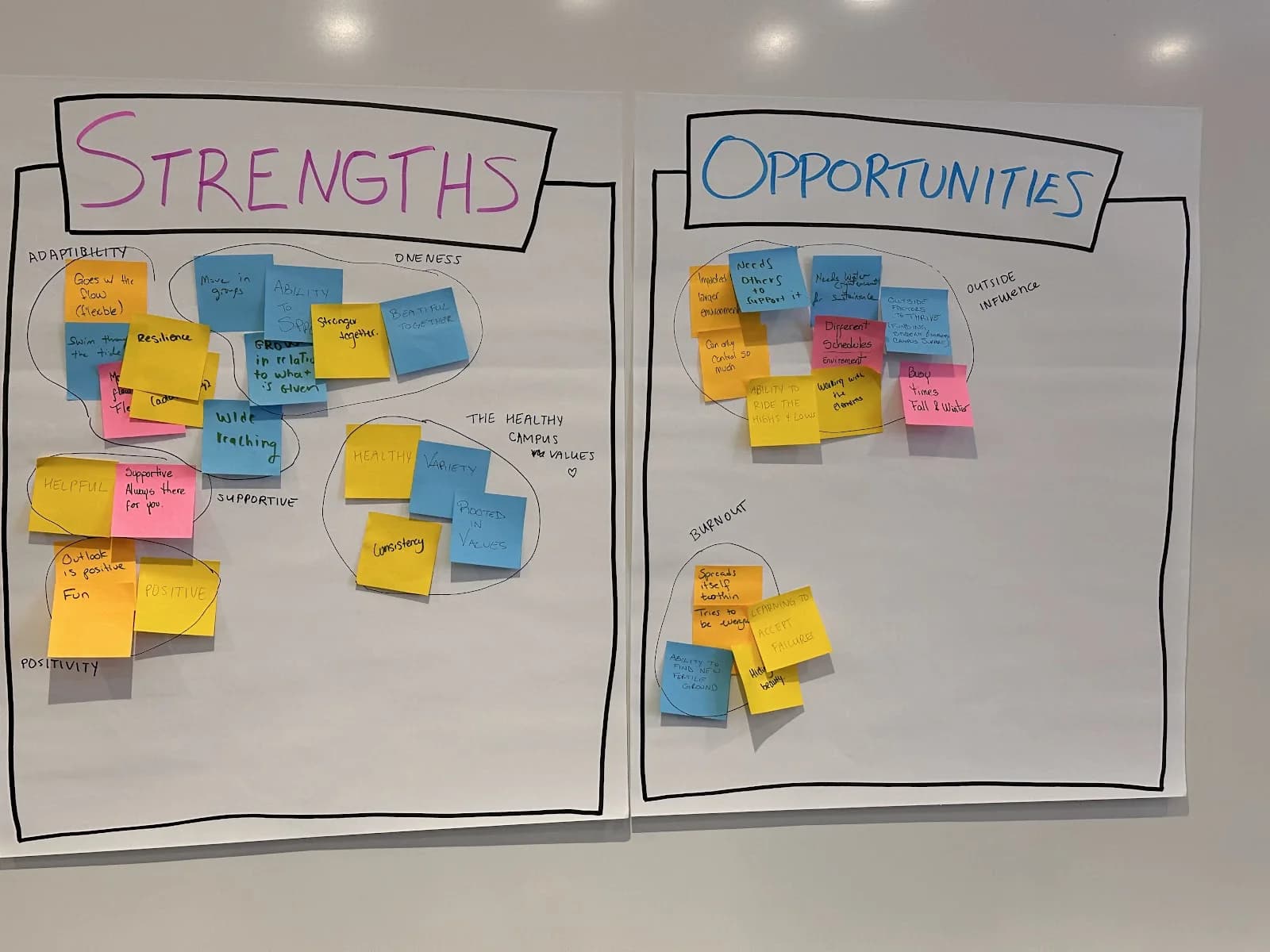
A university wellness team drew its living system, made a creature gallery, and gathered strengths and opportunities on the wall.
Questions for the group
Keep eyes open or closed. Use a picture, a few words, or a description. Everyone can take part.
How it works
Each person imagines the team as a living creature or landscape. Draw it, describe it, or write a few notes. Artistic skill has nothing to do with it.
People introduce their images before anyone interprets them. What helps this creature thrive? What is difficult for it? Stay curious about the differences.
Collect strengths, needs, and challenges on separate notes. Group related ideas and choose the issues the team wants to work on. Make space for observations that don’t fit the main themes.
Groups of three or four take an issue and develop ideas. They can explore it through different attitudes, such as curiosity, respect, or collaboration, or through the organization’s own values.
Turn selected ideas into actions. Name an owner, a first step, a date, and what progress would look like. Each group reports back so the whole team can see the plan.
Back on the ground
Suppose a group draws a tree with branches growing faster than its roots. It might explore what would help the roots catch up: clearer priorities, time to learn, or better support between teams.
A possible commitment: test a weekly cross-team check-in for two weeks, name who will convene it, and review whether it helps people find support. The group decides what the metaphor means and which action fits.
Illustrative example
Choosing the tool
Use it when a group wants to reconnect with purpose, take stock of how it is doing, or make its future more tangible. Decide which team or organization you are focusing on and what you want to explore. Include the people whose perspectives matter, and leave time for follow-through.
Bring the images alongside operational evidence. They open a conversation; the team still needs to test ideas against its constraints and decision authority.
Bring it into your workshop
We can help shape the focus, the pace, and the work that follows.
Discuss this tool with us