Facilitation method
Leapers, Bridge-Builders & Tradition Holders
A fast, active exercise that helps people name how they naturally respond to change, understand each other’s styles, and give every style a job in what comes next.
- Time1–4 hours
- Group sizeA single team to 60+ people
- SpaceOpen floor and three style mats
- You leave withTips for every style and next steps for each
What is the change styles exercise?
Leapers, Bridge-Builders & Tradition Holders is a facilitated exercise that helps a group see the three different ways people tend to respond to change, and how each one helps the change succeed.
We often take for granted that people see change the same way we do. They don’t. Some can’t wait to try the new thing, some want to understand it first, and some want to protect what already works. This exercise gets those differences into the open, so the group can get clear about who needs to do what next and how to support each other through the change.
Who crosses how
The three change styles
Leapers
First across. Leapers love what’s new.
- Strengths
- Energy, curiosity, and a high tolerance for early mistakes. They get change moving.
- Watch for
- They can get bored and chase the next new thing before this one lands.
- Their job in a change
- Get the change going.
Bridge-Builders
They want to see the plan before they cross.
- Strengths
- They ask how, what, and why, and look for data. Once on board, they improve the change and help others follow.
- Watch for
- They can look slow to sign on while they’re still thinking it through.
- Their job in a change
- Improve the change and smooth the way for everyone else.
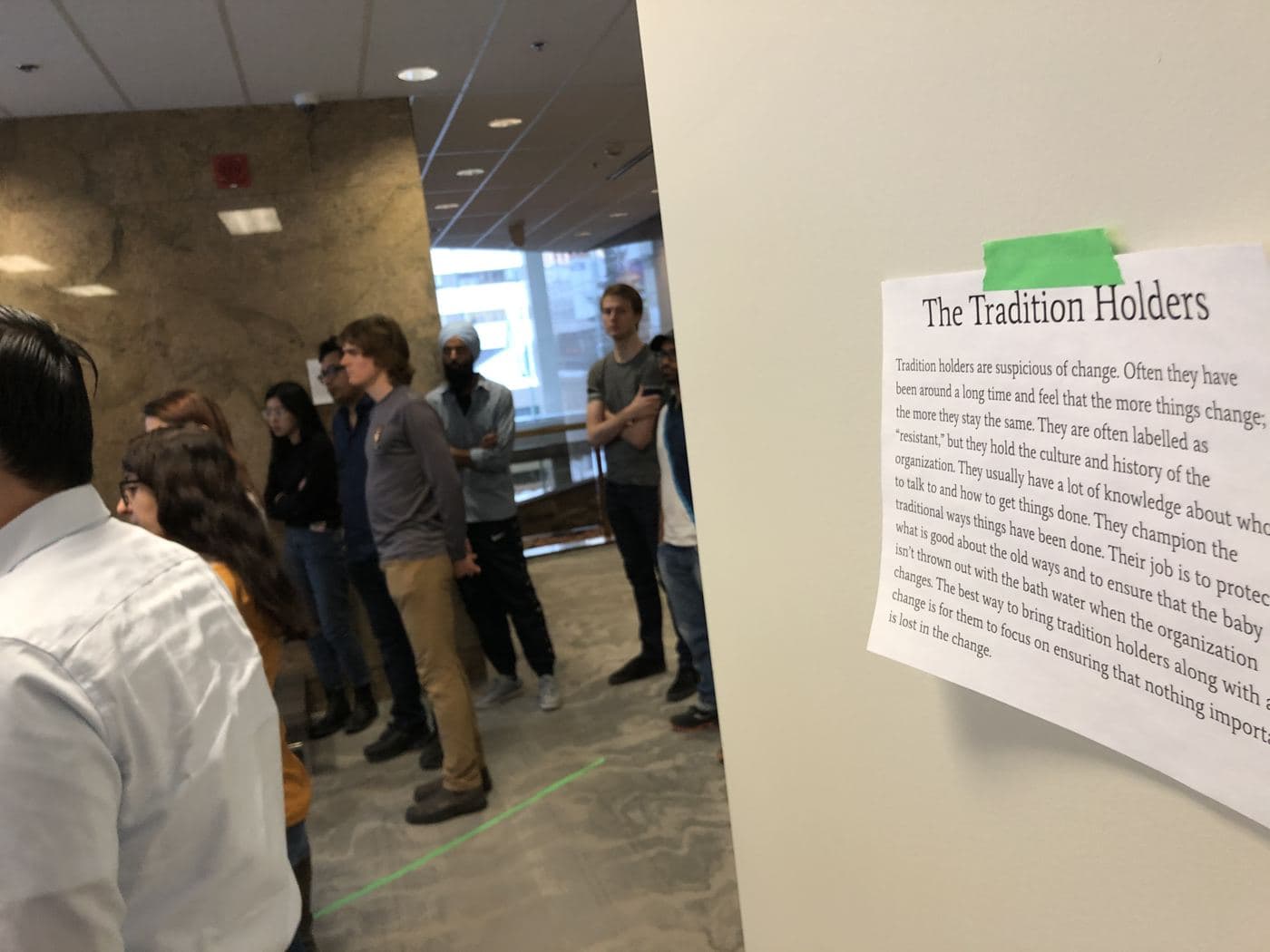
Tradition Holders
They make sure nothing important is left behind.
- Strengths
- They hold the culture and history, and know who to talk to and how things really get done.
- Watch for
- Often unfairly labeled resistant. If nobody listens, they dig in.
- Their job in a change
- Protect what’s good about the way things work today.
The big insight
Tradition Holders aren’t resistance
The people who push back on a change are often the ones who know the organization best. They carry its history, know who to call, and can see what the change might break. When we give them the job of making sure nothing important gets lost, their skepticism becomes one of the change’s biggest assets.
Step by step
How the exercise runs
Lay out the three styles
Three style mats go on the floor in a large triangle, with plenty of room to move.
Honor every style
We introduce the styles and make one point clear: each has an equally important role in a change.
Choose your style
Everyone stands with the style that fits how they feel about this particular change.
Find your motion
In silence, each group creates a motion that captures its style, then shows the room.
Coach us
Each group names its strengths and watch-outs, and writes tips: “coach us on how to get the best out of us.”
Report back
Every group shares its tips with the whole room.
Read the room
We look at the mix. Mostly Leapers? Mostly Tradition Holders? What will that mean, and what should the group compensate for?
Plan next steps
Each style group commits to a few concrete actions for the change ahead.
One example from our work
Circle Cardiovascular Imaging
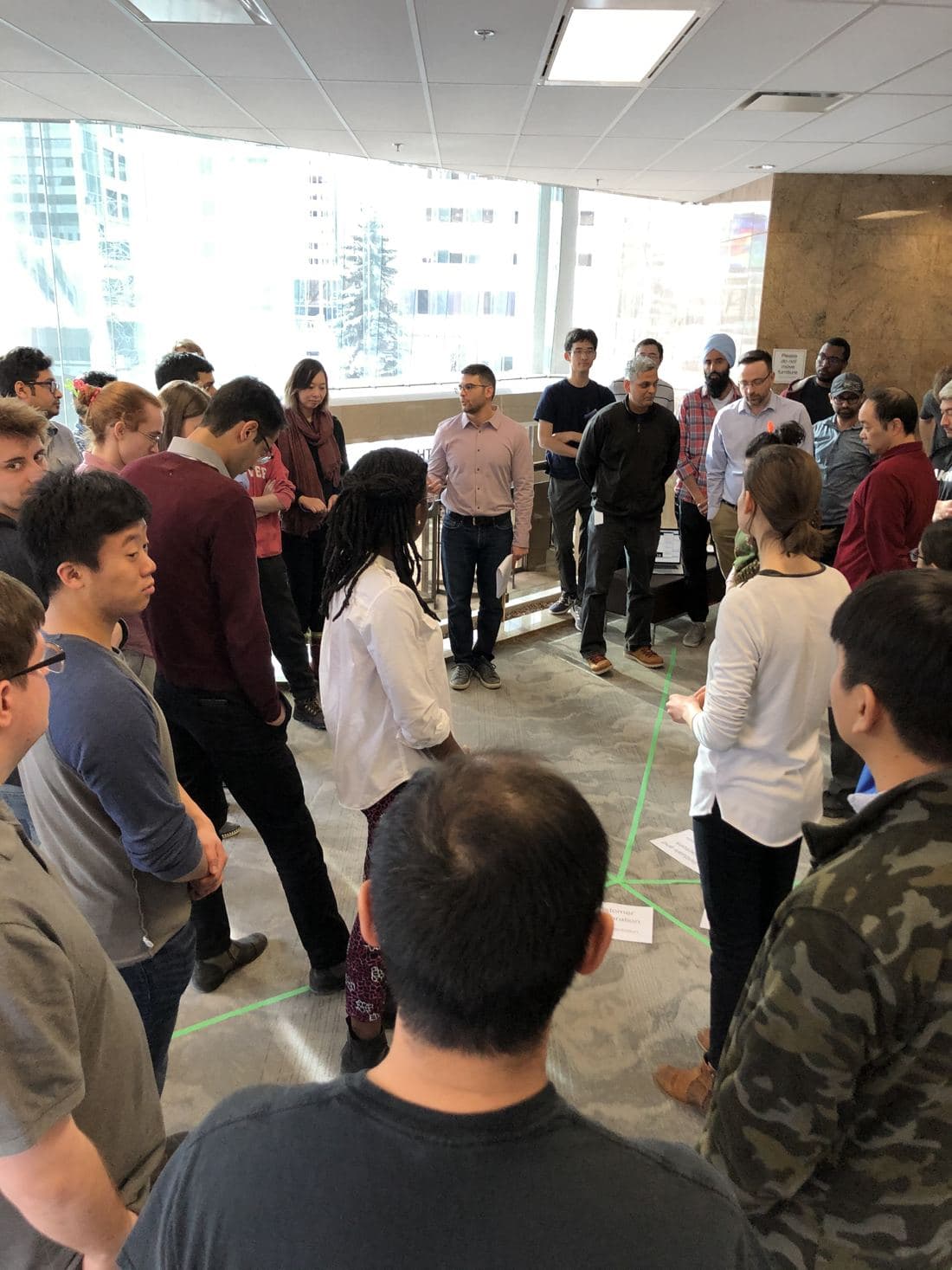
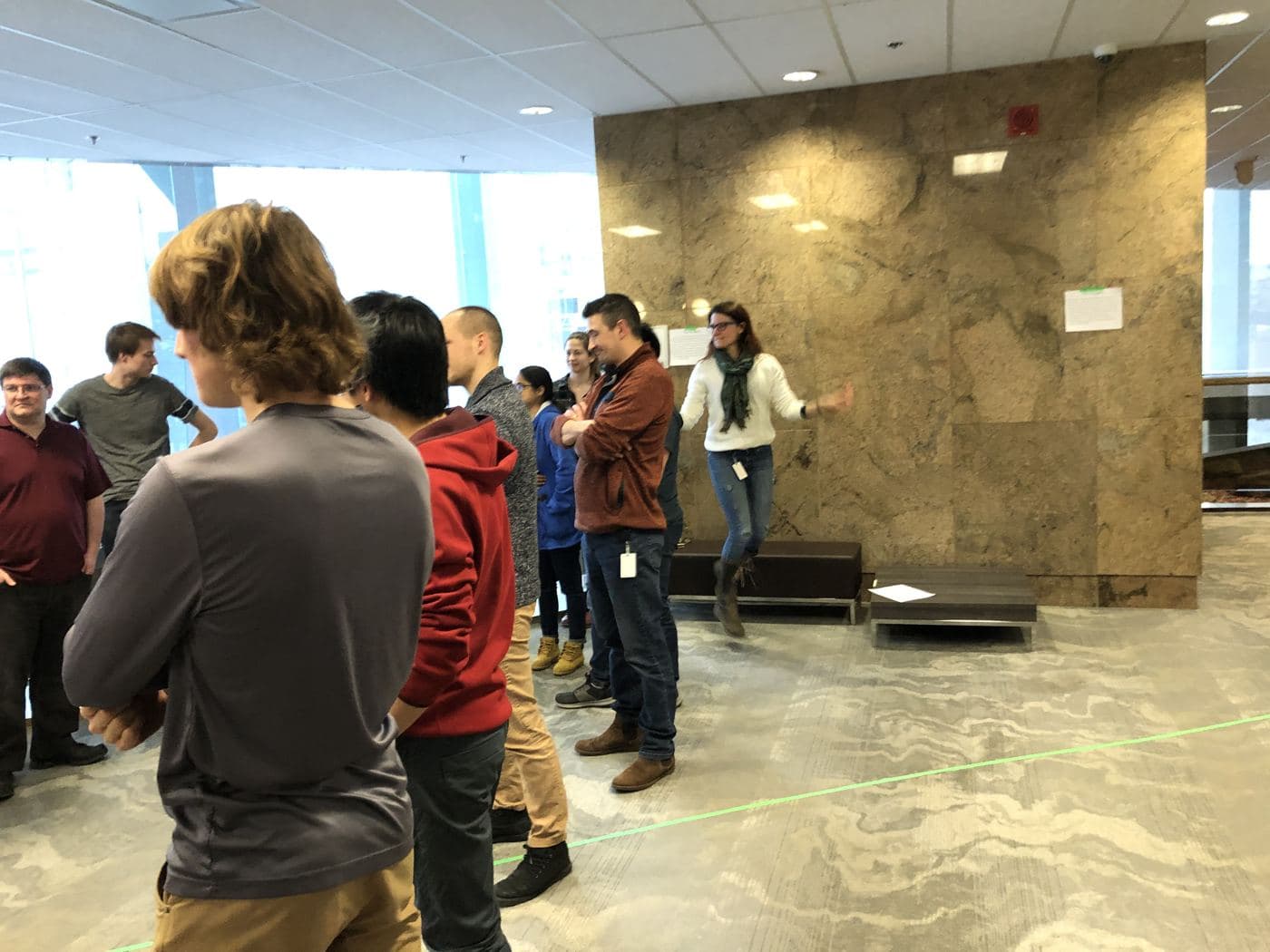
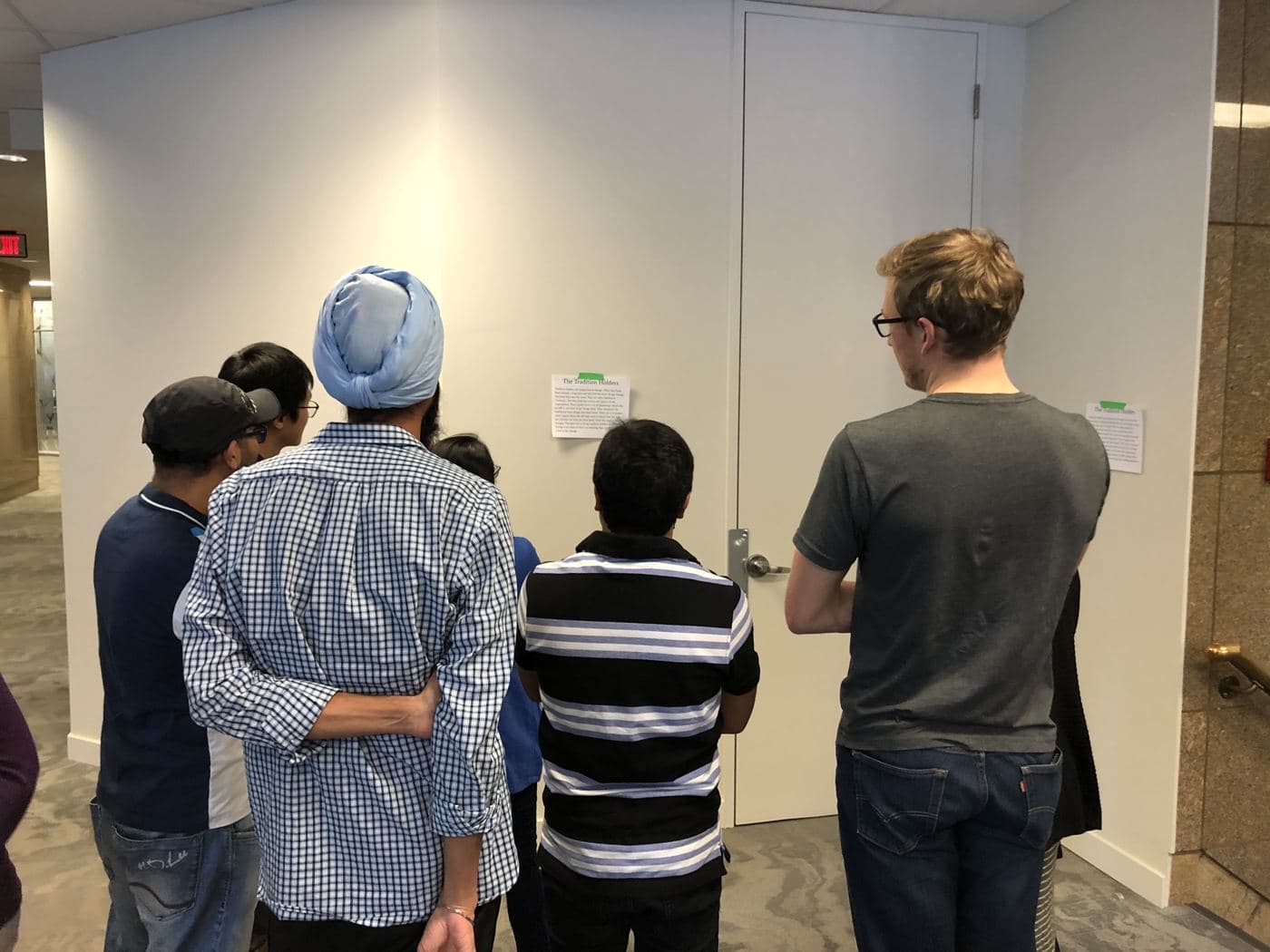
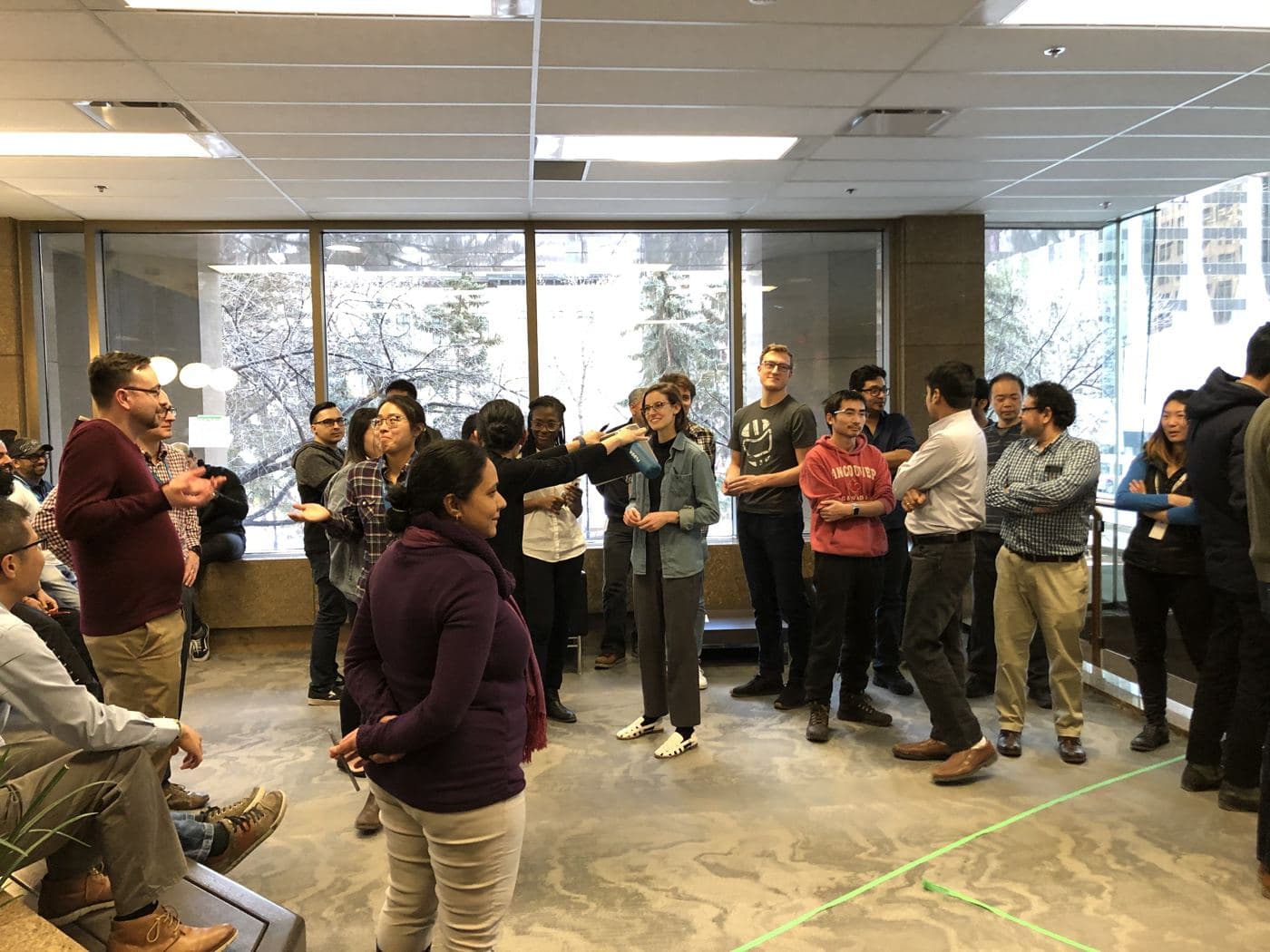
During an in-person agile training for about 60 people, we moved the whole group out to the mezzanine, laid the three styles on the floor, and asked everyone to stand with how they felt about bringing more agility to Circle. Then each group found its motion, coached the room on how to work with it, and planned its next steps.
Read the room
What your mix of styles tells you
Once everyone has chosen a style, the room can see its own balance. That picture shapes how the change should be led.
Mostly Leapers
Plenty of energy and fast starts. Watch for half-finished changes and the next shiny thing.
Mostly Bridge-Builders
Thoughtful and well researched. Watch for long waits before anyone takes the first step.
Mostly Tradition Holders
Deep memory and strong relationships. Make the reasons for change clear and give them a real role.
Before anyone leaves
Next steps for every style
Leapers
You’ll get things going and lead this change. What are your next steps?
Bridge-Builders
You may have more research or thinking to do. What are your next steps?
Tradition Holders
Your job is to make sure we don’t lose what matters most. What are your next steps?
Is it the right tool?
When to use it
A strong fit
- A team or organization is about to try a new way of working
- A change is meeting pushback and people feel unheard
- Mixed groups need a quick, energetic way to understand each other
- You want everyone to leave with a role in the change, not just an announcement
Choose something else when
- The change has been decided and there is no room for input on how it happens
- Trust is so low that people can’t be honest about how they feel
Questions we often hear
How long does it take?
One to four hours, depending on the size of the group and how much time you want for action planning. It works on its own or as part of a longer workshop.
How many people can take part?
It works for a single team and for large groups. At Circle Cardiovascular Imaging we ran it with about 60 people. You just need enough floor space for everyone to move between the three styles.
Can someone be more than one style?
Yes. Most people have a natural tendency, but you might be a Leaper about technology and a Tradition Holder about how your team runs its meetings. We ask people to choose the style that fits this particular change.
Aren’t Tradition Holders just resistant to change?
No, and that’s one of the most useful insights from the exercise. Tradition Holders protect the culture and history that make an organization work. Giving them the job of making sure nothing important is lost turns perceived resistance into a real contribution.
Where does the exercise come from?
It’s adapted from Organization and Relationship Systems Coaching (ORSC) by CRR Global. Our facilitators hold the ORSCC credential.
Leading a change soon?
Tell us what’s changing and who’s involved. We’ll help you design a session that gives everyone a role in it.
Book a discovery call