A health innovation board with invited guests
- What is changing?
- Where are important needs still going unmet?
- Where could we make our strongest contribution, where should we partner, and where are others better placed to lead?
Facilitation method
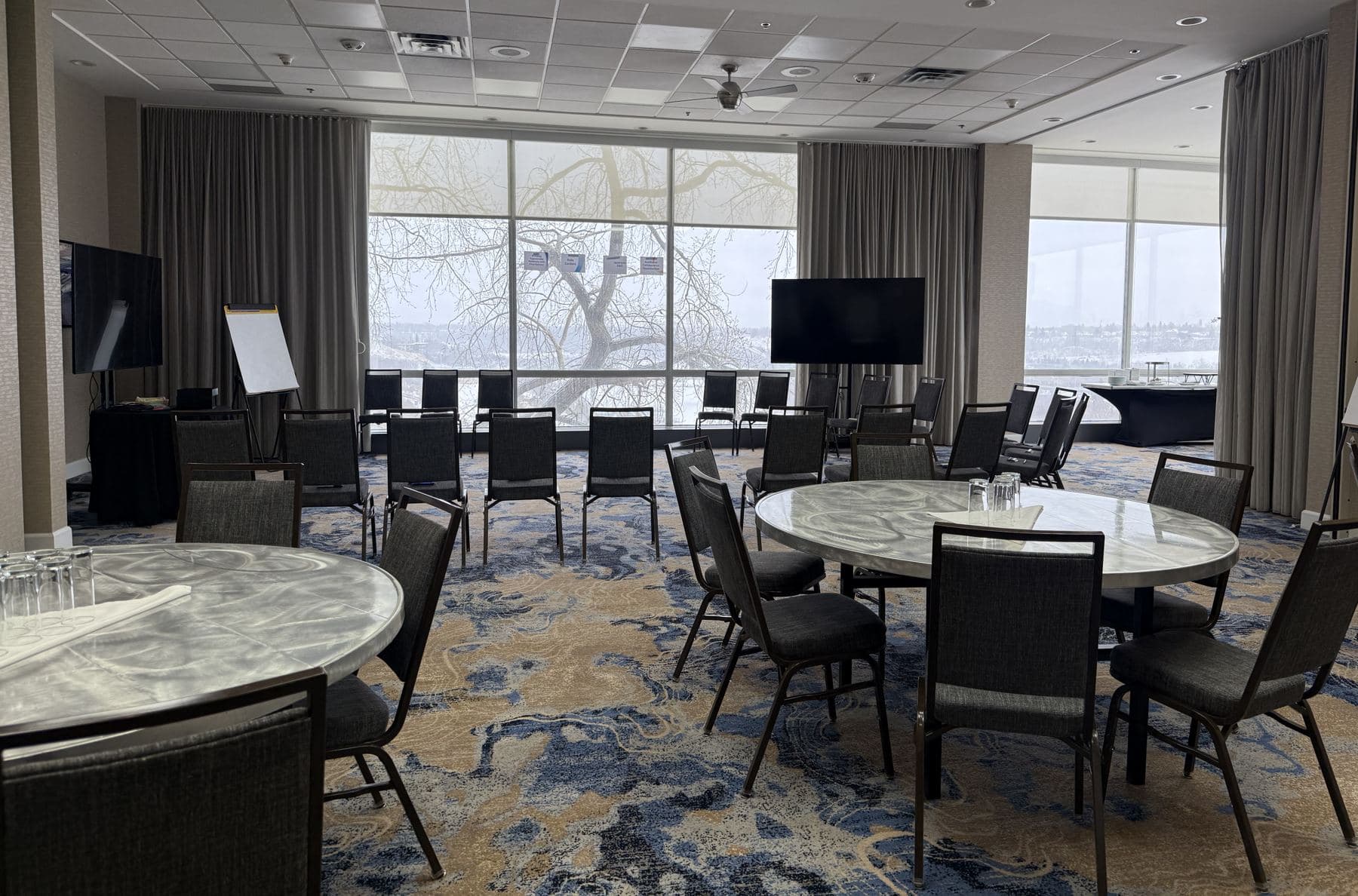
Small tables, big questions, and a room that keeps moving. Ideas travel from table to table until the whole group can see what it thinks.
Now seating
Round 1 of 3
20 minutes · one question per table
Your order
World Café · for the whole room
Total time90 min to a half day
“It’s kind of like an actual café. It’s got the milling about, the conversation, and the informality of it.”
World Café is a structured conversation for large groups that keeps the intimacy of a small table.
People sit in small groups, each table holding one powerful question. After a round, one host stays and everyone else moves to a new table, carrying what they heard. Each table builds on the group before it, so ideas deepen and perspectives cross-pollinate across the room.
Because everyone is in a small group, everyone is contributing the whole time. Nobody sits and listens to a panel for an hour. The answers that come out reflect the wisdom of the group as a whole, not the loudest voice in it.
What happens at a table
Table questionOne question that matters to everyone in the room
Small groups, mixed on purpose, at a table set with one question.
Ideas go straight onto the paper tablecloth, so nothing lives only in someone’s head.
When the round ends, the host keeps the table and everyone else moves to the next table.
A quick recap of what the last group said, so nobody starts from zero.
Each new group takes the conversation further than the one before.
The rotation
Each color is a group and the table it started at. Hosts, the open rings, stay put. Everyone else moves together, one table clockwise, after each round. With three tables and three rounds, every group gets to every table.
Round 1
Each group starts at its own table.
Round 2
Hosts stay. Every group moves one table clockwise.
Round 3
One more move, and every group has visited every table.
Who does what
Stays put for the whole café. Welcomes each new group, recaps what came before, and keeps the thread of the conversation.
Everyone else. They move after each round and carry what they heard into the next conversation. That’s the cross-pollination.
That’s us. We craft the questions with you, set the room, keep time, and run the harvest so the room hears itself.
The secret ingredient
A café is only as good as its questions. We write them with you: open, worth the room’s time, and impossible to answer with a yes or no. Here are a few we have set on real tables.
A health innovation board with invited guests
A health quality agency’s strategy session
An environmental services provider’s business development leaders
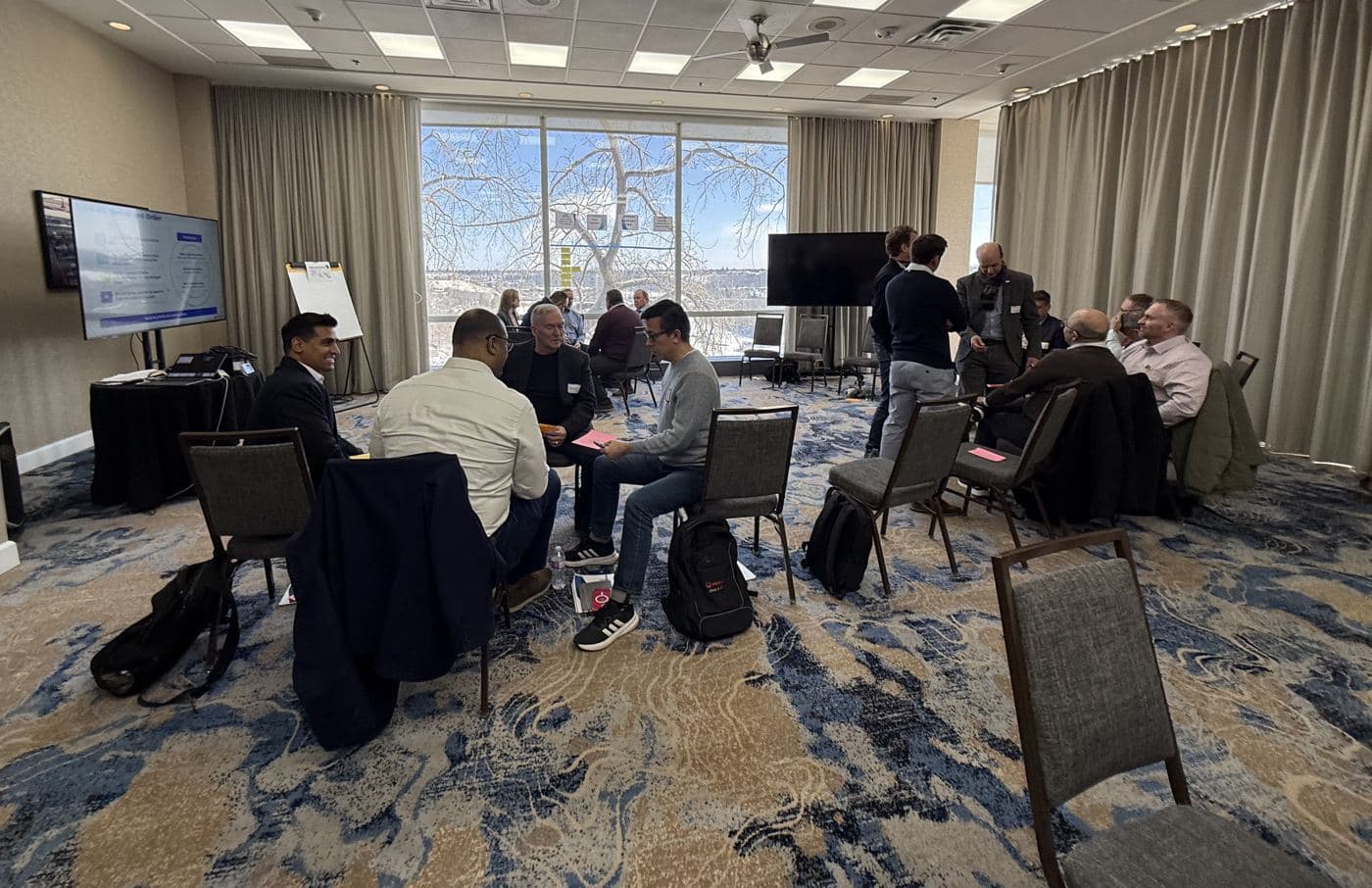
When the last round ends, the hosts share where their tables landed. We reflect the strongest themes back to the room, so people hear the collective intelligence they just created.
Usually you’ll want to turn what was discussed into something meaningful. So we leave space for the room to prioritize, and for small groups to plan what they will try and when they will report back.
Is it the right order?
A three-hour roundtable for a few dozen leaders. We shape the questions, timing, and seating with you before the day.
Café rounds at the tables
To go
Nobody sits out. Each person adds to every topic a little.
Patterns that came from the whole group, so people see their own thinking in them.
People leave knowing colleagues and partners they had never really talked to.
We send a post-workshop report with the themes, priorities, and next steps.
We design most cafés for 15 to 60 people. What matters is the table: small groups of four to eight, so everyone talks.
In Open Space, participants create the agenda and choose where to go. In World Café, we set the questions with you in advance and everyone rotates through them, so every person contributes to every topic. Choose Open Space when you want energy and ownership around topics people pick; choose World Café when you want the whole room’s thinking on a few questions that matter to everyone.
They can, but they don’t have to. Some groups prefer to be shown where to sit, so we assign starting tables to mix departments, organizations, or levels on purpose. After that, the rotation does the mixing.
World Café opens up thinking. To land decisions, we pair it with a convergence step: the whole room prioritizes the themes, dot votes, or forms small action groups that agree on next steps and when they will report back.
Juanita Brown and David Isaacs developed it in 1995 after noticing that some of the best thinking at a gathering happened in informal conversations over coffee. They designed a format that recreates that feeling on purpose.
Yes. Our co-founder Brock Argue wrote a practical guide to facilitating World Café. Bring us in when the stakes are high, the group is large, or you want to take part rather than run the room. Read Brock’s World Café guide
Tell us who will be in the room and what you need to talk about. We’ll help you find the questions and design the café with you.
Book a discovery call